


24 7 Automated Trading System That Holds Up
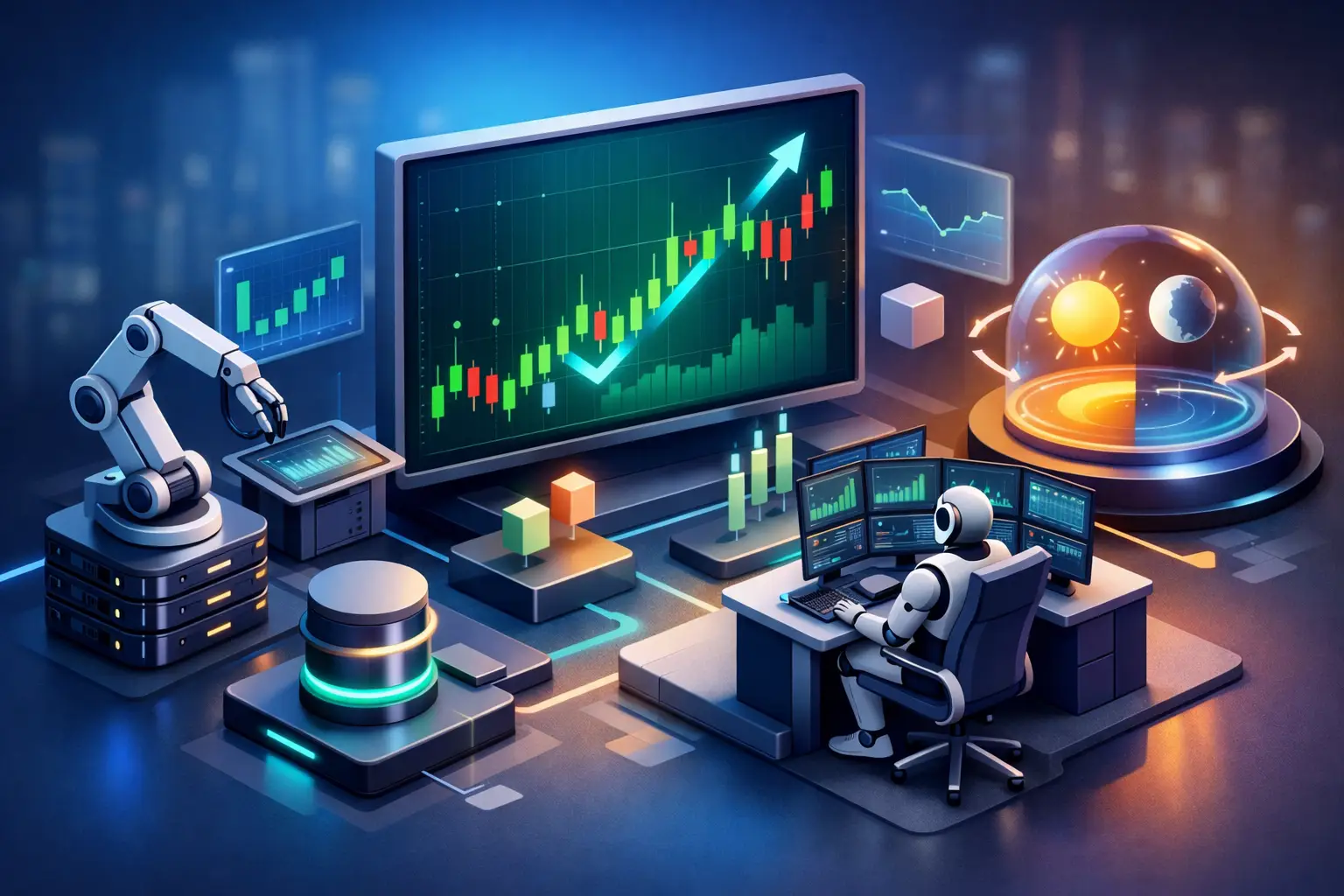
Most traders do not lose because they lack ideas. They lose because their execution breaks down at the worst moment - a missed alert at 2am, a delayed entry during volatility, a stop adjusted on instinct instead of rules. A 24 7 automated trading system is designed to remove that weak point. The goal is not just to keep trading while you sleep. The goal is to convert a valid edge into disciplined, continuous execution.
That sounds straightforward until live markets get involved. Plenty of systems look clean in a backtest and fall apart when spread widens, liquidity shifts, or a market moves too fast for manual intervention. So the real question is not whether automation works. It is whether your trading system is built to survive real conditions, across the assets you actually trade, with the speed and control needed to keep decisions mechanical.
What a 24 7 automated trading system should actually do
At a minimum, an always-on system should read market conditions, evaluate rules, place orders, manage risk, and keep running without requiring constant supervision. But minimum standards are not enough if you trade actively.
A serious 24 7 automated trading system should do three things well. First, it should preserve strategy logic exactly as tested. Second, it should execute fast enough that the live result remains close to the model. Third, it should give you visibility while the system runs, so you are not flying blind just because the process is automated.
That last point matters more than many traders expect. Automation is not abdication. If you cannot see why a system entered, how it is performing, or whether market conditions have shifted, then you have replaced emotional trading with passive negligence. Good automation reduces interference, not awareness.
Why traders move from manual to automated execution
The move usually starts with frustration. You build a repeatable setup, see it work often enough to trust it, then fail to execute it consistently. Sometimes you hesitate. Sometimes you overtrade. Sometimes you miss the cleanest move because you are watching another chart or away from the screen.
Manual trading also scales badly. One market might be manageable. Two or three with different sessions, volatility profiles, and trigger conditions quickly become messy. Add perpetuals, forex, metals, tokenised stocks, or event markets, and the process becomes fragmented. Your edge gets diluted by switching costs and decision fatigue.
A 24 7 automated trading system solves that by making the chart, the strategy, and the execution part of one process. You define the logic once, test it on relevant historical data, and let the system act when the conditions appear. No waiting for a notification. No need to be at the desk for every move. Stop watching. Start executing.
The difference between automation and real trading infrastructure
This is where many platforms fall short. They offer alerts, partial scripting, or disconnected bots, but not a complete execution environment. That gap matters because automation is only as good as the chain between signal and fill.
If your charting sits in one place, your backtesting in another, and your live orders somewhere else, every handoff adds friction and failure risk. You end up debugging tools instead of improving strategy logic. For active traders, that is not a small inconvenience. It is a structural disadvantage.
A stronger setup keeps the full workflow together: chart analysis, indicator logic, historical validation, deployment, and live management. When the trading terminal and execution layer are tightly aligned, the strategy you tested is much more likely to behave the way you intended in production.
How to build a 24 7 automated trading system that is worth deploying
The first step is strategy clarity. If your rules are vague, automation will expose the weakness immediately. "Buy strength" is not a system. A real system defines entry, exit, invalidation, position sizing, and the conditions under which it should stay out of the market.
The second step is backtesting with relevant data. Not generic assumptions. Not a cherry-picked period. You want data that reflects the venue, the instrument, and the behaviour you expect to trade. A strategy tested on one market structure and deployed in another can fail even if the idea itself is sound.
The third step is execution design. This is where many retail traders underestimate the importance of infrastructure. A strategy that depends on fast entries or precise stop logic needs a terminal that can act with minimal delay. If execution is slow, your expected edge can disappear before the order lands.
The fourth step is live monitoring. Not manual intervention on every candle, but clear oversight. You should be able to track signals, fills, PnL, and strategy status in real time. If the system stops behaving as expected, you need to know quickly.
This is the practical four-step workflow that matters: define the logic, validate it properly, deploy it cleanly, and monitor it without meddling.
What breaks most automated systems
Usually, it is not one dramatic flaw. It is a pile of small mismatches.
Overfitting is the obvious one. A strategy tuned too closely to historical noise can produce excellent backtests and poor live results. Another common problem is regime dependency. Systems built for trending conditions often struggle in chop, while mean-reversion logic can get run over in strong directional moves.
Then there is execution drift. Your script may trigger correctly, but if slippage, latency, or liquidity are worse than assumed, the realised performance can differ materially from the test. This matters even more in faster markets and around major events.
Risk design is another pressure point. Many traders automate entries before they automate risk properly. That is backwards. A 24 7 automated trading system without disciplined sizing, stop logic, and exposure limits is simply a faster way to make avoidable mistakes.
Why on-chain execution changes the equation
For traders used to centralised exchanges, automation often comes with trade-offs around trust, transparency, and control. You may get speed, but not ownership. You may get convenience, but not visibility into how the venue operates.
On-chain trading changes that balance when the infrastructure is fast enough. Instead of sending strategy logic into an opaque environment, you can execute directly within a transparent market structure while keeping the benefits of systematic trading. That is especially relevant for traders who want autonomy without giving up performance.
Platforms built around Hyperliquid's high-performance infrastructure make this practical. You can build and backtest strategy logic, then deploy hands-free systems with sub-second execution and zero downtime across perpetuals, spot, and event markets. For traders who want one terminal across crypto, forex, metals, equities proxies, and macro contracts, that matters. It means less tool switching, fewer operational gaps, and tighter alignment between idea and execution.
When a 24 7 automated trading system is the wrong choice
Automation is powerful, but it is not mandatory for every trader or every setup. If your edge depends heavily on discretionary macro interpretation, thinly traded conditions, or event-specific judgement that cannot be expressed in rules, forcing it into code may make it worse.
It is also the wrong choice if you are using automation to avoid doing the hard work. A weak strategy does not become strong because it runs all day. Bad logic executed continuously is still bad logic.
The better test is simple. If you can define your edge precisely, verify it on realistic data, and benefit from removing hesitation or missed execution, automation is likely a good fit. If your process still depends on instinct that cannot be measured, you may need more development before deployment.
The real edge is consistency
The appeal of a 24 7 automated trading system is not that it feels futuristic. It is that it enforces consistency where humans usually fail. It executes the same way at noon and at 3am. It does not chase. It does not flinch after a losing streak. It does not abandon the plan because one candle looks dramatic.
That consistency is where scale begins. Once your logic can run without constant supervision, you can spend more time improving systems and less time babysitting trades. You stop acting like a manual operator and start thinking like a strategist.
Borsa is built for exactly that shift - from chart-based idea to autonomous, on-chain execution in one terminal. Build once, trade forever.
The traders who benefit most from automation are not chasing novelty. They are removing friction, protecting discipline, and giving a tested edge room to work. If that is your objective, the right system should feel less like a bot and more like infrastructure you can trust when markets do what markets always do - move before you are ready.