


Hyperliquid vs TradingView Execution Compared
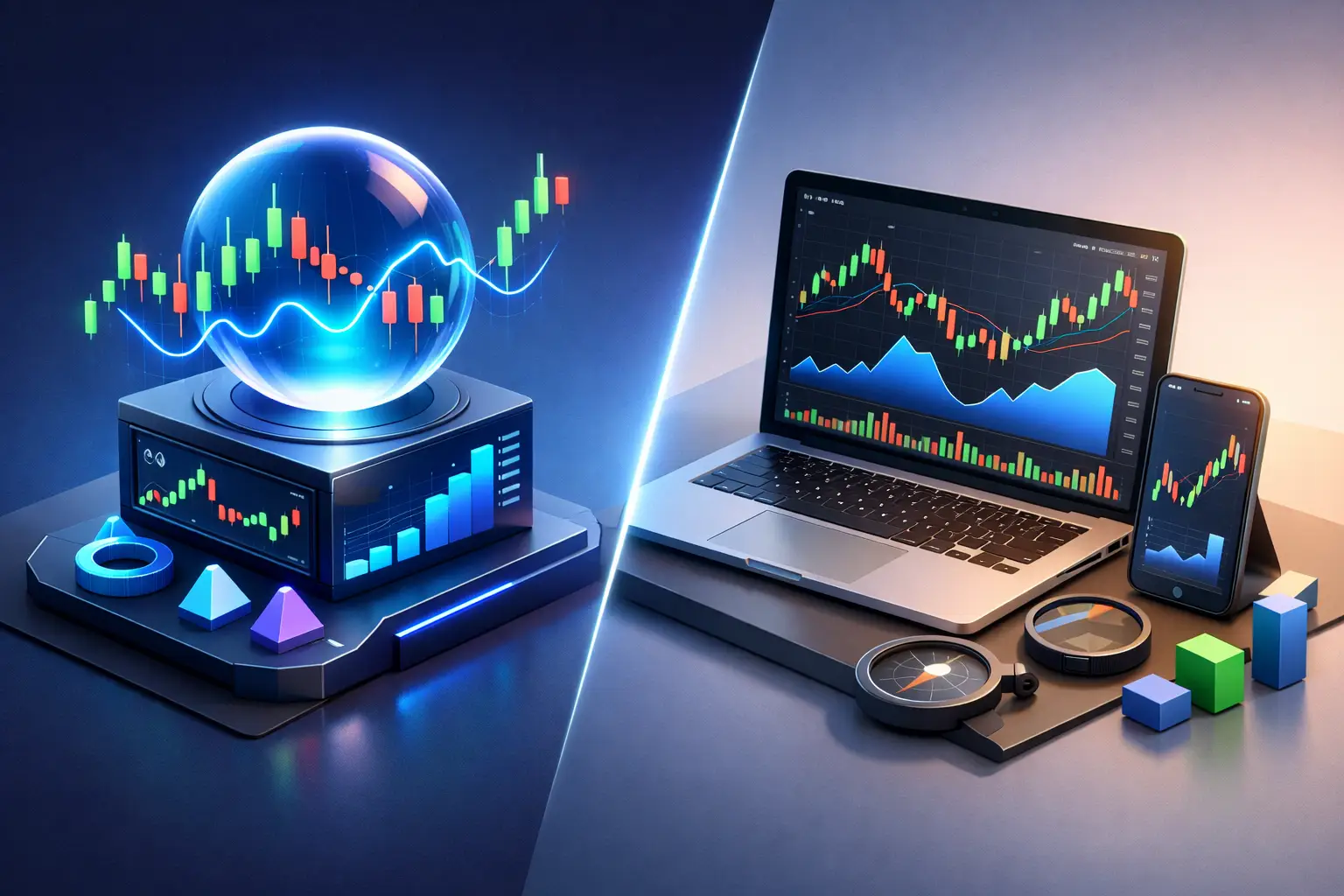
A chart can show the trade. An alert can flag the moment. Neither guarantees that an order reaches the market with the speed, precision, and logic your strategy requires. That is the real issue behind Hyperliquid vs TradingView execution. Traders often treat them as competing platforms, when they serve fundamentally different roles in the trading stack.
TradingView is built around market analysis: charts, indicators, scripts, alerts, and visual strategy research. Hyperliquid is an on-chain trading venue and execution environment. One helps define a market idea. The other is where positions are opened, reduced, stopped, and managed on a live order book.
For active traders, the edge is not choosing one over the other. It is removing the gap between the two.
Hyperliquid vs TradingView Execution: The Core Difference
TradingView execution usually means sending an order through a supported broker connection or using alerts as triggers for an external process. Its native strength is the decision layer. You can build a signal from price action, volume, moving averages, market structure, custom indicators, or Pine Script logic, then see precisely why the condition fired on the chart.
Hyperliquid execution means placing and managing orders directly on Hyperliquid's infrastructure. Orders are handled on-chain through a high-performance L1 designed for trading. That matters when a signal must become a live order without passing through a chain of manual actions, browser tabs, centralised exchange accounts, or a fragile collection of scripts and third-party services.
The distinction sounds simple, but it changes how a system behaves under pressure. A TradingView alert is a notification or event. It is not, by itself, a complete execution engine. It does not determine how an order should be sized after partial fills, whether an existing position must be closed first, how a stop should adjust, or what happens if an asset has already moved beyond an acceptable entry range.
A proper Hyperliquid execution workflow handles those decisions as part of the strategy rules.
What TradingView Does Best
TradingView remains one of the strongest visual environments for technical traders. Its charting is familiar, fast to interpret, and flexible enough for discretionary analysis as well as systematic idea generation. A trader can inspect multiple timeframes, overlay indicators, plot entries and exits, and test the historical behaviour of a rule set before risking capital.
Pine Script is particularly useful for turning a vague thesis into explicit conditions. Rather than saying, “I buy breakouts when momentum looks strong,” you can define the exact breakout level, trend filter, volatility condition, session window, and invalidation point. That forces discipline before execution is even considered.
For discretionary traders, alerts can also reduce screen time. A price crossing a level, an indicator changing state, or a multi-condition setup completing can prompt attention at the relevant moment.
But alerts have limits. They can tell you that a condition occurred. They do not automatically provide institutional-grade position management. If you receive an alert at 02:00, you still need a reliable mechanism that interprets it, checks live state, and acts according to your rules. Manually opening the chart, checking the market, calculating size, and entering the trade reintroduces delay and emotional judgement at exactly the point your system was meant to be objective.
What Hyperliquid Does Best
Hyperliquid is where trading logic meets a live, liquid market. It provides direct access to perpetuals, spot markets, and expanding on-chain market types without forcing traders into opaque centralised exchange workflows.
The execution advantage is control. A strategy can use defined order types, leverage parameters, position limits, stop logic, and take-profit rules while operating against Hyperliquid's native markets. The trader retains visibility over activity and settlement rather than relying on a black-box venue to explain how orders were handled.
Speed matters here, but speed is not merely a headline figure. The practical question is whether the time between a valid signal and a managed order is short, predictable, and free from unnecessary dependencies. A fast venue does not help much if the signal still waits for a webhook, a serverless function, an API relay, and a manually maintained bot before it can trade.
Hyperliquid also suits traders who want a unified approach across more than crypto. When tokenised stocks, commodities, forex, metals, indices, and macro event contracts are available within the same on-chain environment, strategy builders can apply a consistent process across markets. The logic may differ by asset, but the operating model does not have to.
The Execution Gap Most Traders Underestimate
The gap between analysis and execution is where otherwise sound strategies fail. A backtest may assume an immediate fill at a clean price. Live markets do not. Spreads widen, volatility accelerates, liquidity shifts, and a signal can arrive when the account already has exposure.
This is why alert-to-order automation needs more than a simple “buy” command. It should account for current position direction, maximum allocation, duplicate signals, entry tolerance, exits, and failure behaviour. If a long signal appears while the system is already long, should it add size, ignore the event, move a stop, or reverse? There is no universal answer. The correct behaviour depends on the strategy.
A second issue is strategy drift. Traders often test one version of an indicator, then execute a slightly different version through another tool. Inputs change. Timeframes are mismatched. A stop is managed by hand despite being included in the original test. Over time, results no longer resemble the system that was validated.
The stronger workflow keeps the chart logic, historical testing, live signal visualisation, and order management connected. That creates an auditable path from condition to action.
When Manual Trading Still Makes Sense
Automation is not automatically superior. Manual trading can be the right choice for a trader making low-frequency decisions around exceptional news, changing liquidity conditions, or highly contextual market events. A macro announcement may demand judgement that a fixed ruleset cannot yet express.
TradingView is excellent in those moments. It gives the trader a clear visual workspace to assess structure and act deliberately. Hyperliquid then provides the venue for direct market access and transparent execution.
The trade-off is consistency. Manual execution is slower and harder to reproduce. It also becomes difficult to scale across assets, sessions, and strategies without increasing the chance of fatigue or impulse decisions. If your edge relies on reacting to repeatable conditions, automation is usually the more defensible path.
Building a Better Trading Workflow
The practical objective is straightforward: define logic once, prove it against relevant data, then deploy it without creating a new set of execution risks.
Start by building the rule set visually. Use chart structure and indicators to define the setup, then write every decision into the strategy: entries, exits, sizing, timing, and conditions that prevent a trade. Backtest with care. Historical results are not a promise of future performance, especially when fills, fees, slippage, and changing liquidity are involved, but they can expose weak logic before it reaches live capital.
Next, determine whether the strategy needs human approval or autonomous execution. A discretionary alert may be enough for a rare, high-conviction setup. A repeatable intraday or multi-market system needs reliable automation. The more frequently signals occur, the more costly manual intervention becomes.
Then connect execution to actual account state. Live systems should know whether they are flat, long, short, partially filled, or stopped. They should not blindly repeat instructions because an indicator flashed twice. This is the difference between a chart alert and an operating trading system.
Finally, monitor without micromanaging. Real-time visibility matters, but the point of automation is not to watch every candle from a different screen. It is to know that the strategy is following its rules, with clear controls when market conditions or performance require intervention.
Borsa brings this workflow into one trading terminal: professional TradingView charting, Pine Script strategy logic, Hyperliquid historical data, signal visualisation, and direct on-chain deployment. The goal is not another dashboard. It is a shorter path from validated idea to always-on execution.
Choose the Layer That Solves Your Problem
If your problem is finding and validating trade setups, TradingView is the analysis layer. If your problem is placing and managing trades on a fast, decentralised market, Hyperliquid is the execution layer. If your problem is the costly distance between those layers, the answer is an integrated workflow built for automation.
Stop treating the alert as the finish line. Treat it as the start of a controlled execution process, then make every action after that signal as deliberate as the analysis that created it.