

TradingView Automated Trading Setup That Works
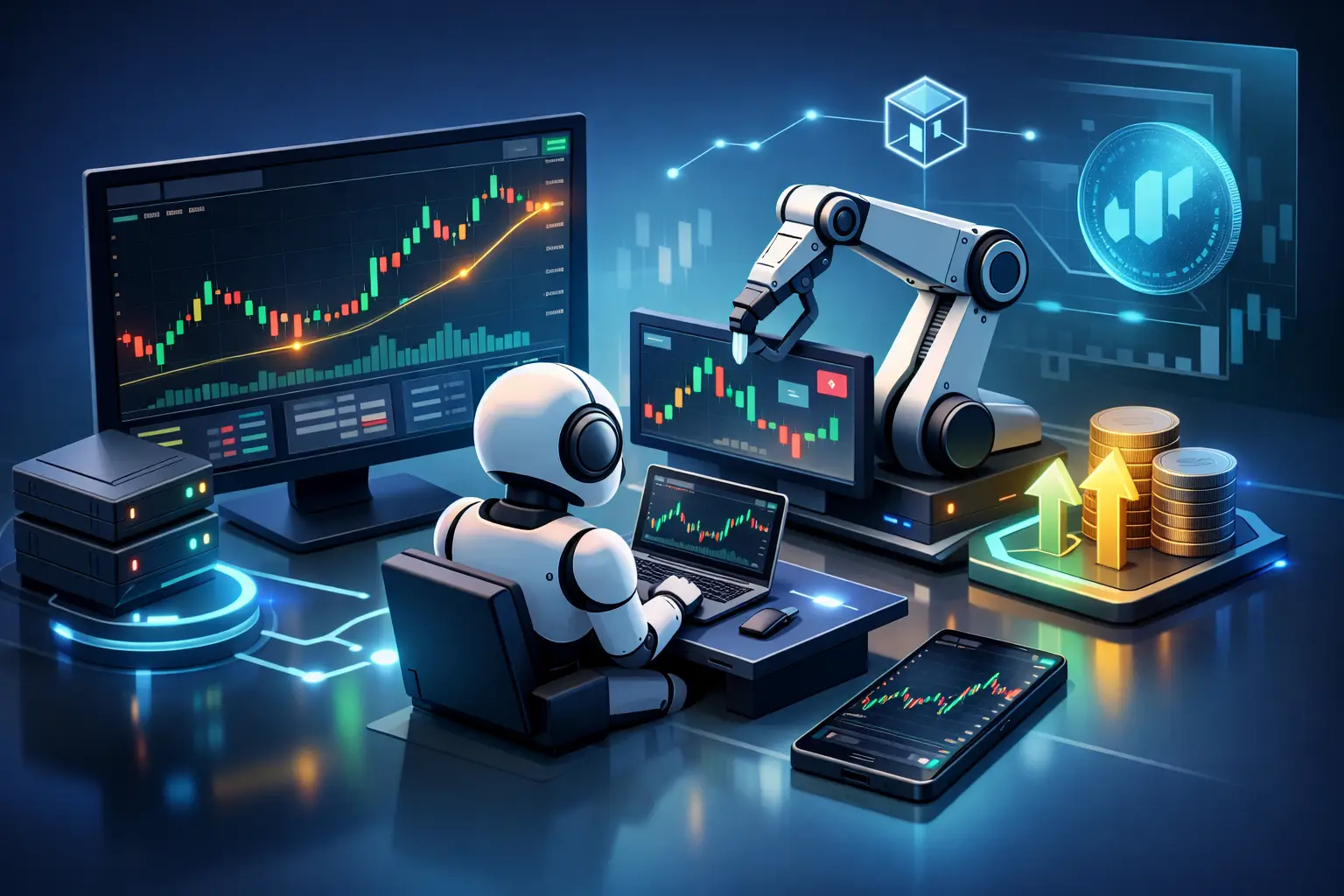
If your strategy still lives in TradingView alerts, screenshots, and manual order entry, you do not have a system. You have a bottleneck. A proper TradingView automated trading setup closes the gap between chart logic and live execution, so the same rules you test are the rules that actually trade.
That sounds simple. It rarely is. Most traders lose time stitching together charts, alerts, webhooks, exchange tabs, spreadsheets, and trade journals, only to discover that the real problem was never signal generation. It was execution discipline. Automation matters because it removes hesitation, standardises decision-making, and lets you run the same edge across more markets without babysitting every candle.
What a TradingView automated trading setup actually needs
A workable setup has four moving parts. First, you need strategy logic, whether that comes from Pine Script, indicator conditions, or imported custom tools. Second, you need validation through backtesting on relevant historical data. Third, you need a clean path from signal to order. Fourth, you need monitoring, because automated does not mean unmanaged.
Plenty of traders get stuck between the first and third steps. They can write conditions. They can create alerts. But once the alert fires, execution becomes fragile. A webhook can fail, a bot can misread payloads, position sizing can drift, or a market can move far enough that the trade you wanted is no longer the trade you got.
That is why the setup matters more than the script alone. A good system is not just about finding entries. It is about making sure those entries become consistent, repeatable actions under live market conditions.
The best TradingView automated trading setup starts with workflow
Serious traders should think in workflow, not tools. The cleanest path is straightforward: define the rules, test the rules, deploy the rules, then supervise performance in real time. If any of those stages live in separate environments with separate data assumptions, friction appears fast.
That friction usually shows up as mismatched fills, confusion over whether an alert actually triggered a live position, or endless tweaking because your backtest environment does not resemble your execution environment. The more fragmented the stack, the more likely it is that your strategy behaves differently in production than it did on the chart.
A stronger approach is to keep charting, strategy building, deployment, and position management as close together as possible. That is where platforms designed for direct on-chain execution stand apart. Instead of pushing signals through a chain of third-party tools, you reduce moving parts and keep tighter control over how the strategy behaves once it goes live.
Build the logic first, but keep it tradeable
The most common mistake in automation is building a beautiful script that cannot survive live conditions. A setup only works if the logic is specific enough to execute and simple enough to maintain. That means clear entry conditions, clear exits, defined invalidation, and position sizing rules that do not rely on discretionary judgement.
If your rules include phrases like “wait for confirmation” or “avoid bad market conditions”, they are not ready. An automated strategy needs exact thresholds. It also needs guardrails. Maximum concurrent positions, daily loss limits, session filters, and slippage assumptions are not optional extras. They are part of the strategy.
This is also where market choice matters. A breakout system on crypto perpetuals may respond well to round-the-clock liquidity and momentum. The same logic on tokenised equities or macro event contracts may need very different risk parameters. Automation scales your edge, but it also scales your mistakes if you apply one template blindly across every instrument.
Backtesting is useful, but only if it is honest
Backtests are where most strategies look their best and where traders are most likely to fool themselves. The point of testing is not to produce a perfect equity curve. It is to stress the idea before capital is at risk.
Start with realistic assumptions. Use sensible fees, realistic execution expectations, and market data that reflects where you actually intend to trade. If your future live execution will happen on Hyperliquid markets, then validating your system against relevant historical data is far more useful than testing in a vacuum.
Be careful with overfitting. If a strategy only works after fifteen filters, six optimised inputs, and one oddly specific time window, it probably does not have much edge. Strong systems are usually understandable. You should be able to explain why the logic works, when it is likely to underperform, and what kind of market structure it depends on.
It also helps to review the ugly parts, not just the attractive metrics. How long are drawdowns? How clustered are losses? Does performance rely on a handful of outlier trades? Those questions matter more than a high win rate screenshot.
Deployment is where most setups break
A TradingView alert is not execution. It is a message. The hard part is turning that message into a correctly sized order, on the right market, with the right risk logic, every single time.
This is where traders often inherit unnecessary complexity. One service sends the alert. Another translates it. Another holds the API connection. A separate dashboard tracks open positions. When something fails, diagnosing the issue becomes its own job.
A cleaner setup reduces translation layers. If you can move from chart logic to direct live deployment in one environment, you remove a large share of operational risk. That is the real edge of an integrated terminal. You spend less time debugging plumbing and more time refining strategy performance.
For traders building on Hyperliquid, that matters even more. Speed is not just a convenience. It affects whether your automated system enters where expected, manages risk properly, and stays aligned with live market structure. Borsa is built around that principle: chart, validate, deploy, and manage autonomous strategies directly on-chain without splitting the workflow across multiple tools.
Monitoring still matters after launch
Hands-free does not mean brain-off. Once a strategy is live, monitoring becomes about verification rather than intervention. You want to know whether orders are firing correctly, whether slippage is within tolerance, and whether actual behaviour matches the tested model.
This is also where traders need discipline. Not every losing streak means the strategy is broken. Equally, not every profitable week proves the setup is sound. The right response depends on whether the current conditions still match the assumptions behind the system.
A useful rule is to define review triggers before you go live. That could be a maximum drawdown threshold, a change in volatility regime, or repeated execution drift beyond acceptable levels. Predefined review rules stop you from interfering emotionally at the worst possible moment.
What to avoid in a TradingView automated trading setup
The biggest trap is treating automation as a shortcut. It is not. It is structure. If your logic is weak, automation just makes weak decisions faster.
The second trap is building for novelty instead of durability. Traders love adding filters, extra indicators, and complex conditional logic because complexity feels sophisticated. In live markets, complexity often means more points of failure. A simpler model with cleaner execution usually beats an elaborate one you cannot trust.
The third trap is ignoring operational details. Webhook formatting, position sizing, instrument mapping, and failure handling are not back-office problems. They are trading problems. A strategy with a small edge can be ruined by messy deployment.
Finally, avoid the idea that one setup should handle every market in the same way. Crypto, forex, metals, and indices do not move with identical rhythm. The infrastructure may support all of them, but the logic still needs to respect market-specific behaviour.
What good looks like
A strong setup feels almost boring. The chart logic is clear. The backtest assumptions are realistic. The deployment path is short. The monitoring is constant but not obsessive. When the system wins, you know why. When it loses, you know whether the loss sits within expectations or points to a structural issue.
That is the point of a proper TradingView automated trading setup. Not more noise. Not more dashboards. Just a tighter line between idea and execution.
If you want to trade seriously, stop treating automation as a side project. Build the rules properly, test them honestly, deploy them where execution is fast and direct, and let the system do the job you designed it to do. The traders who keep their edge are usually the ones who stop watching every tick and start engineering their process.